Shockwave Therapy for Stubborn Pain That Hasn't Responded to Other Care
A non-invasive treatment that uses focused acoustic waves to stimulate healing in chronic tendon and soft-tissue conditions — especially plantar fasciitis and frozen shoulder.
What Is Shockwave Therapy?
Extracorporeal shockwave therapy (ESWT) delivers focused acoustic pressure waves through the skin into an injured area. Unlike shockwave lithotripsy used to break up kidney stones, the goal here is not to destroy tissue — it's to create a controlled, low-grade stimulus that triggers the body's own healing response in tissue that has become stuck in a chronic, poorly-healing state.
🔨 Think of It Like Restarting a Stalled Repair Job
Chronic tendon and soft-tissue injuries — like long-standing plantar fasciitis or a stiff, frozen shoulder — often get "stuck." The tissue stops actively healing and just stays inflamed and irritated. Shockwave therapy acts like a reset signal: the mechanical energy is thought to increase blood flow to the area and kick-start the cellular repair processes that had stalled, giving the tissue a fresh chance to actually heal rather than just staying chronically irritated.
Shockwave therapy has been used clinically for musculoskeletal conditions for over two decades, and has been studied in hundreds of randomized controlled trials worldwide. It's most useful for chronic conditions — ones that have lasted weeks or months and haven't responded well to rest, stretching, or other conservative care — rather than as a first-line treatment for a brand-new injury.
Who Is a Good Candidate for Shockwave Therapy?
Shockwave therapy tends to be a good fit for people who:
Have a Chronic, Stubborn Condition
Symptoms that have persisted for months, especially plantar fasciitis, frozen shoulder, or tennis elbow that hasn't improved with rest or stretching alone.
Haven't Responded to Conservative Care
Physical therapy, over-the-counter anti-inflammatories, or other conservative treatments haven't provided lasting relief.
Want to Avoid More Invasive Options
Prefer to explore a non-surgical, non-injection option before considering steroid injections or surgery.
Are Willing to Commit to a Full Course
Most research supports a series of treatments — typically weekly for several weeks — rather than a single session.
Shockwave Therapy for Plantar Fasciitis
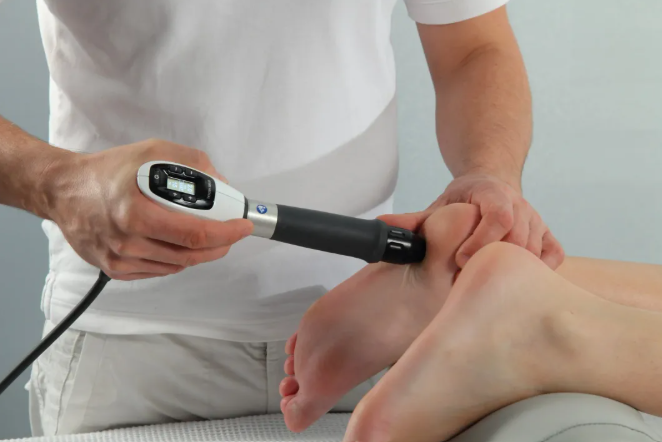
Shockwave applied to the plantar fascia for chronic heel pain
One of the Most Studied Uses of Shockwave Therapy
Plantar fasciitis — pain along the bottom of the heel and arch, often worst with the first steps in the morning — is one of the most extensively researched applications of shockwave therapy. Multiple systematic reviews and meta-analyses of randomized controlled trials have found that shockwave therapy can reduce pain in chronic plantar fasciitis.1,2
Worth noting honestly: the size of the benefit varies across studies. One meta-analysis of 897 patients across six trials found a statistically significant improvement in pain, but the average effect size was small, and a sensitivity analysis limited to only the highest-quality trials did not find a significant difference.2 Other more recent reviews have found more consistent benefit, particularly when shockwave is combined with a home stretching and orthotic program rather than used alone.1,3 In practice, we typically recommend shockwave therapy alongside — not instead of — a home exercise and stretching program.
Shockwave Therapy for Frozen Shoulder (Adhesive Capsulitis)
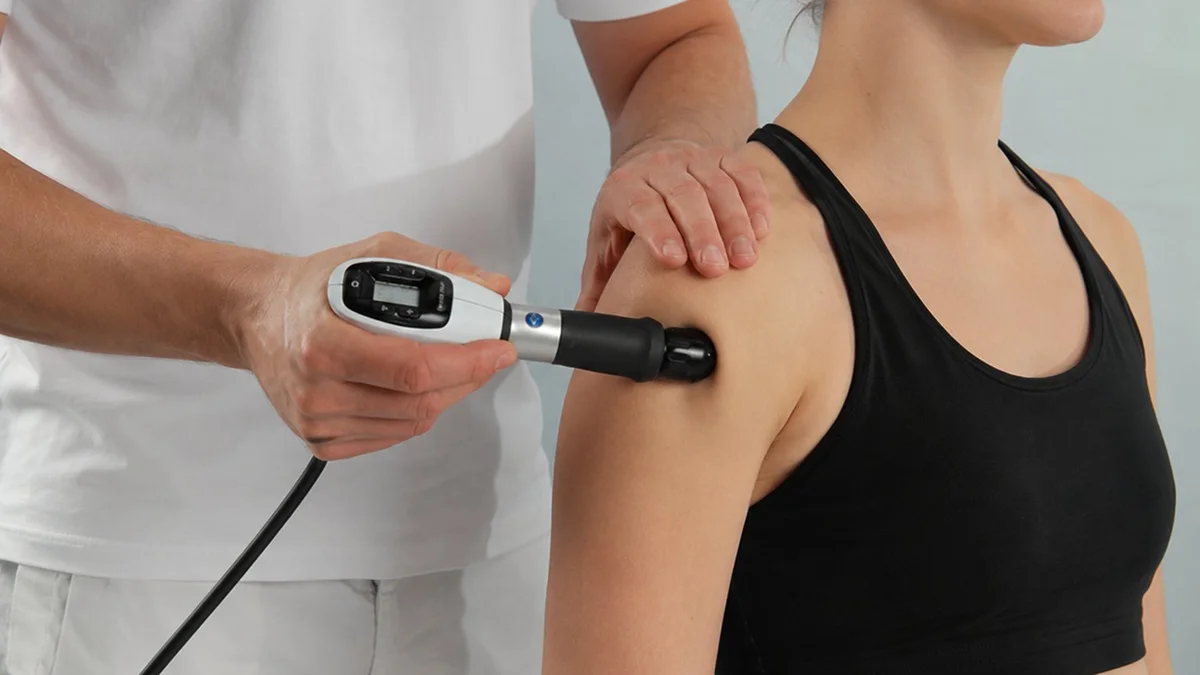
Shockwave therapy applied to the shoulder for adhesive capsulitis
An Adjunct Treatment With Growing Evidence
Frozen shoulder (adhesive capsulitis) causes progressive stiffness and pain that can severely limit shoulder motion, and can take a year or more to resolve on its own. Several systematic reviews of randomized controlled trials have found that shockwave therapy, used as an adjunct alongside standard physical therapy, is associated with improved pain, range of motion, and disability scores compared to standard care alone.4,5
One systematic review focused specifically on frozen shoulder in patients with type 2 diabetes — a population where frozen shoulder is especially common and often more difficult to treat — found that shockwave therapy reduced pain and improved range of motion and disability.4 As with plantar fasciitis, the research base, while positive, still calls for larger, higher-quality trials to nail down the best treatment protocols.5
Other Conditions Shockwave Therapy May Help
Beyond plantar fasciitis and frozen shoulder, shockwave therapy has meaningful research support for several other chronic musculoskeletal and tendon conditions:
Tennis Elbow (Lateral Epicondylitis)
A meta-analysis of 13 trials and over 1,000 patients found shockwave therapy improved pain and grip strength, with better overall safety than several comparison treatments.6
Achilles Tendinopathy
Research has shown shockwave therapy can be an effective option for chronic Achilles tendon pain, often used alongside eccentric strengthening exercises.1
Patellar Tendinopathy (Jumper's Knee)
Studied as a treatment for chronic knee tendon pain common in athletes, particularly when other conservative care hasn't resolved symptoms.1
Rotator Cuff Tendinopathy
Including calcific tendinitis of the shoulder — one of the original, best-established uses of shockwave therapy in orthopedic care.
Golfer's Elbow (Medial Epicondylitis)
A close cousin of tennis elbow, affecting the inner side of the elbow, with a similar treatment rationale and approach.
Chronic Knee Pain
Used as a conservative option for select chronic knee conditions where other tendon and soft-tissue treatments have been tried first.
How Is Shockwave Different From Ultrasound or Laser Therapy?
These treatments are sometimes confused because they're all non-invasive tools used for musculoskeletal pain — but the mechanisms are different.
| Treatment | How It Works | Best For |
|---|---|---|
| Shockwave Therapy | Short, high-energy acoustic pulses that mechanically stimulate tissue repair | Chronic tendon conditions like plantar fasciitis, frozen shoulder, tennis elbow |
| Therapeutic Ultrasound | Continuous sound waves, primarily generating heat in tissue | General soft-tissue warming and minor inflammation |
| Class IV Laser Therapy | Light energy absorbed at the cellular level to support energy production and reduce inflammation | A broad range of pain and inflammation, including TMJ, back and neck pain |
Some research directly comparing shockwave therapy to ultrasound for tennis elbow has found shockwave produced better pain relief.7 We sometimes use shockwave and laser therapy together during the same course of care — see below.
What Happens During Treatment?
Dr. Segal will first complete a thorough history and evaluation of your condition before recommending shockwave therapy — this requires an intake and examination visit, since shockwave isn't the right fit for every condition or every patient.
Treatment sessions are brief, typically around 10 minutes per area treated. Most research protocols use a series of weekly treatments — commonly 3 to 6 sessions — rather than a single visit, since one or two treatments are generally not enough to know whether the therapy is working for your specific condition.
Some mild-to-moderate discomfort during treatment is normal and expected, and typically eases quickly afterward. Possible side effects can include temporary soreness, redness, or bruising in the treated area. Shockwave therapy may be used on its own or alongside chiropractic care, massage, or Class IV laser therapy as part of a broader treatment plan.
Frequently Asked Questions
What is shockwave therapy?
Shockwave therapy, also called extracorporeal shockwave therapy (ESWT), is a non-invasive treatment that delivers acoustic pressure waves through the skin to an injured area. The waves are thought to stimulate blood flow and trigger the body's natural healing and tissue-repair processes in chronic, stubborn musculoskeletal conditions.
Does shockwave therapy hurt?
Most patients feel some mild-to-moderate discomfort or a dull ache during treatment, especially over the most tender area. This typically resolves quickly after each session. It does not require anesthesia or downtime.
How many shockwave therapy sessions will I need?
Most research studies use a course of 3 to 6 weekly treatments to achieve meaningful results. A single session is generally not enough to know whether shockwave therapy is working for your condition. Dr. Segal will discuss a specific plan after your evaluation.
What conditions is shockwave therapy good for?
Shockwave therapy has the most research support for chronic plantar fasciitis, frozen shoulder (adhesive capsulitis), and tennis elbow (lateral epicondylitis). It has also been studied for other tendon-related conditions such as Achilles tendinopathy and patellar tendinopathy (jumper's knee).
Is shockwave therapy covered by insurance?
Most health insurance plans do not currently cover shockwave therapy, and many insurers classify it as investigational despite a substantial body of supporting research. Many of our patients choose to pay for treatment themselves. Our office can help you understand your specific coverage before starting treatment.
How is shockwave therapy different from ultrasound?
Ultrasound uses continuous sound waves primarily to warm tissue, while shockwave therapy delivers short, high-energy acoustic pulses intended to mechanically stimulate a healing response in chronic, poorly-healing tissue. Some research has found shockwave therapy produces better pain relief than ultrasound for conditions like tennis elbow, though both are used as conservative treatment options.
Ready to Find Out If Shockwave Therapy Can Help You?
Call, text, or book online — we're happy to talk through your symptoms and whether shockwave therapy fits your care plan.
Disclaimer: This page is for general educational purposes and is not a substitute for professional medical evaluation. Shockwave therapy does not guarantee specific outcomes, and results vary by individual and condition. Coverage varies by insurance plan and policy. This page does not replace evaluation by a qualified healthcare provider.