Safe Self-Care for Back, Neck & Posture Pain
Practical, evidence-based tips for common aches and pains — plus the warning signs that mean it's time to get evaluated rather than wait it out.
Self-Care for Low Back Pain
Most acute low back pain improves on its own within a few weeks. The biggest mistake people make is resting too much — research consistently shows that staying appropriately active leads to better outcomes than bed rest.1,2
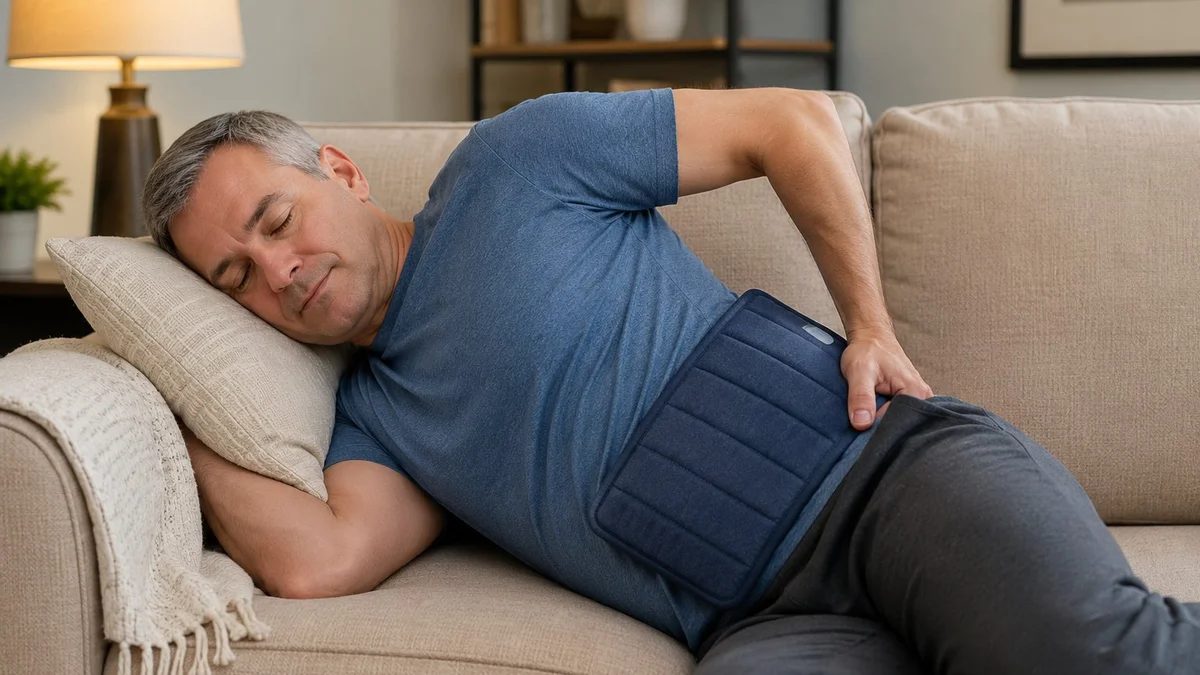
- Stay active. Keep moving within a comfortable range rather than staying in bed. Prolonged rest can actually slow recovery.1,3
- Use heat, not ice, for most cases. Superficial heat for 15–20 minutes at a time has the strongest evidence for short-term relief in low back pain. Research hasn't shown a clear benefit from ice for this specific condition, though it's not harmful if it feels soothing to you.1,4
- Mind your lifting mechanics. Bend at the knees, keep the load close to your body, and avoid twisting while lifting.
- Gentle movement over stretching intensity. Gradually increasing activity — walking, light daily tasks — tends to help more than aggressive stretching in the first few days.
Self-Care for Sciatica
Sciatica — pain, tingling, or numbness traveling down the leg — often stems from a disc issue pressing on a nerve root. While self-care can help manage symptoms, sciatica benefits significantly from a proper evaluation, since the underlying cause affects what treatment will actually help.
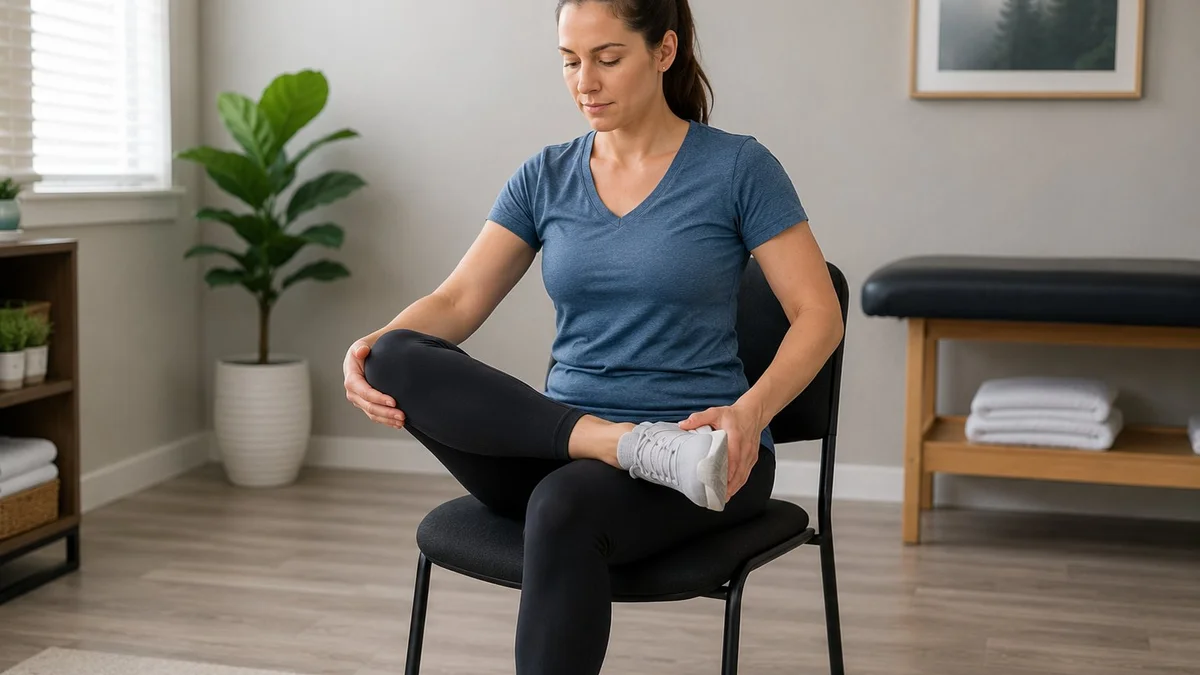
- Avoid prolonged sitting. Sitting tends to increase pressure on the lower spine and can worsen sciatic symptoms.
- Keep moving gently. Short, frequent walks are usually better tolerated than long periods of sitting or standing still.
- Watch for red flags. Numbness in the groin area or new bladder/bowel changes are signs to seek emergency care immediately — see our red flags section below.
Self-Care for Neck Pain
Neck pain is often related to posture, sleeping position, or muscle strain — and frequently overlaps with headaches and shoulder tension.
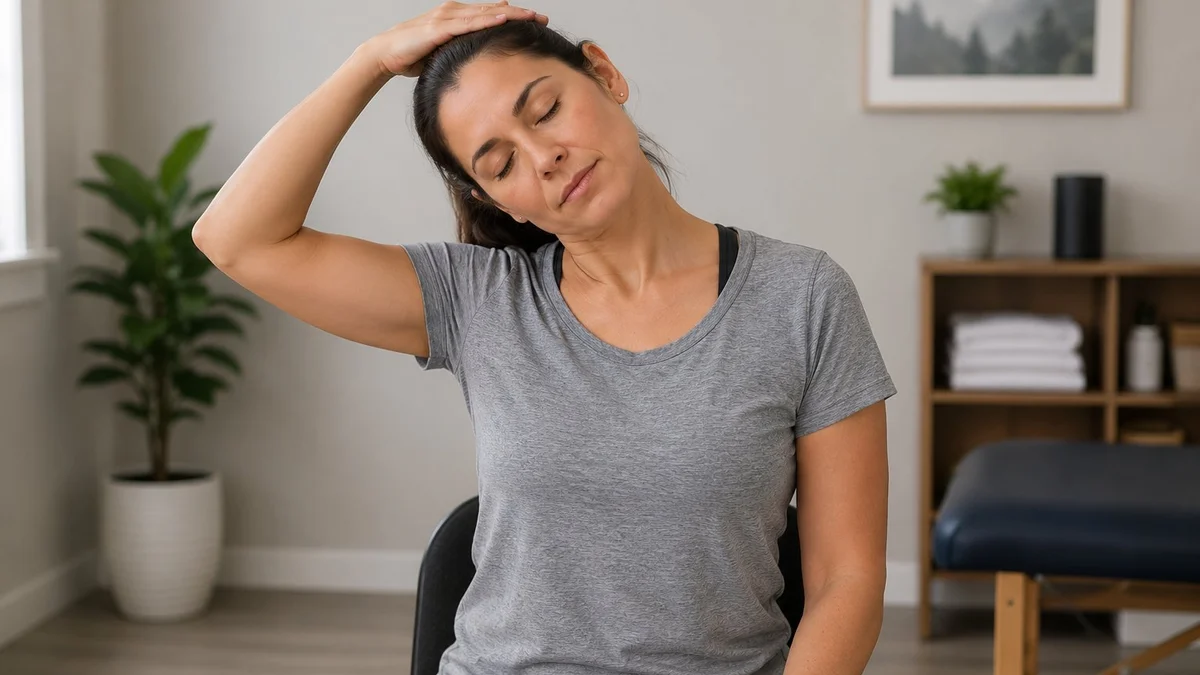
- Check your screen height. A monitor or phone held below eye level encourages the forward-head posture that strains the neck.
- Gentle range-of-motion movement. Slow, pain-free neck rotations and tilts can help relieve stiffness without overstretching an irritated area.
- Supportive sleep position. A pillow that keeps your neck aligned with your spine (not too high, not too flat) can reduce morning stiffness.
- Heat for muscle tension. A warm compress can help relax tight neck and shoulder muscles.
Rounded Shoulders & Forward Head Posture
Rounded shoulders and forward head posture almost always occur together, and share the same root cause: certain muscles (chest, front of neck) become tight while others (upper back, deep neck flexors) become weak.5,6 This pattern is sometimes called "upper crossed syndrome," and it's extremely common with desk work and phone use.5
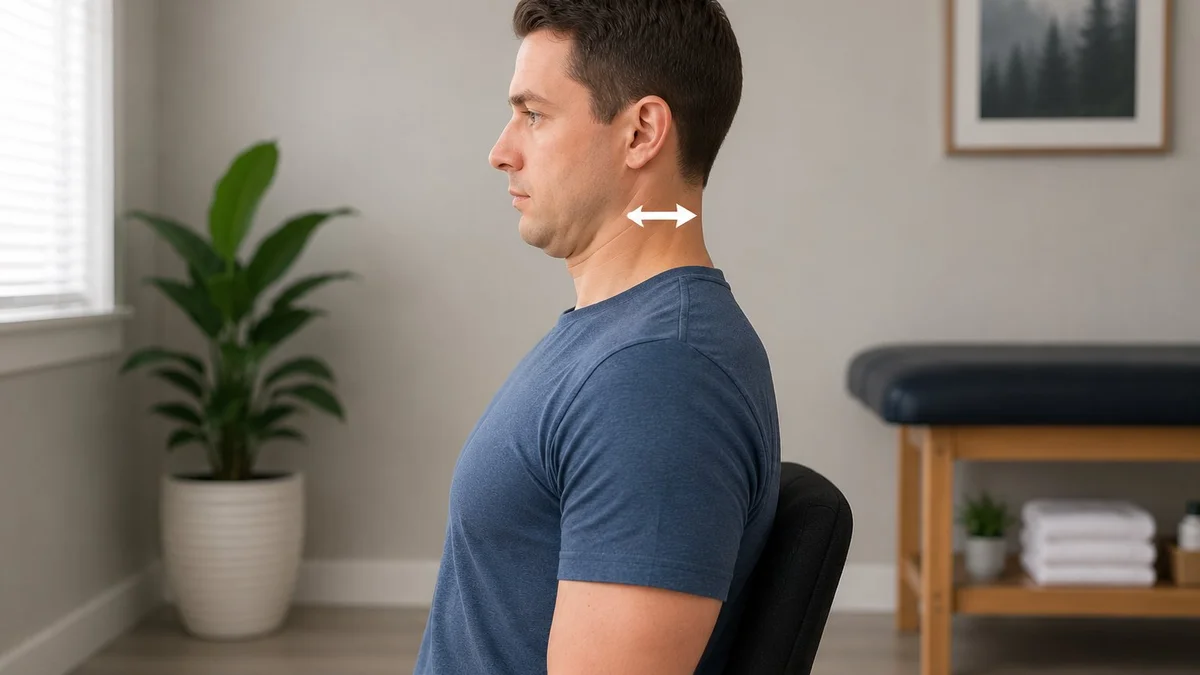
- Chin tucks. Gently draw your chin straight back (creating a "double chin") and hold for a few seconds. This is one of the most consistently recommended exercises for forward head posture, since it both stretches and strengthens the right muscles at once.6,7
- Wall pec stretch. Stand side-on to a wall, arm outstretched behind you, and gently rotate away to stretch the chest. Hold 20–30 seconds per side.6
- Strengthen the upper back. Rows, band pull-aparts, and shoulder blade squeezes target the weak muscles that need to "catch up" to the tight ones.5,8
- Consistency matters most. This pattern usually develops over months or years, so meaningful change takes sustained effort, not a single stretching session.
"Buffalo Hump" & Posture-Related Neck Humps
This is one area worth clarifying carefully, since two different things often get called the same name.
Two Different Things, Often Confused
A true "buffalo hump" (medically, a dorsocervical fat pad) is a fat deposit at the base of the neck, sometimes associated with hormonal conditions like Cushing's syndrome or certain medications.9,10 If this appears suddenly, or comes with other symptoms like unexplained weight gain or muscle weakness, it should be evaluated by a physician.10
A "dowager's hump" is different — it's a posture-related curvature (kyphosis) at the base of the neck, caused by long-term forward head posture and upper back rounding.9,11 This type generally responds well to posture correction and the same exercises described above.11
Many people use "buffalo hump" colloquially to describe the posture-related version, even though that's technically a dowager's hump. If you're not sure which you have, that's a great question to bring to an evaluation.
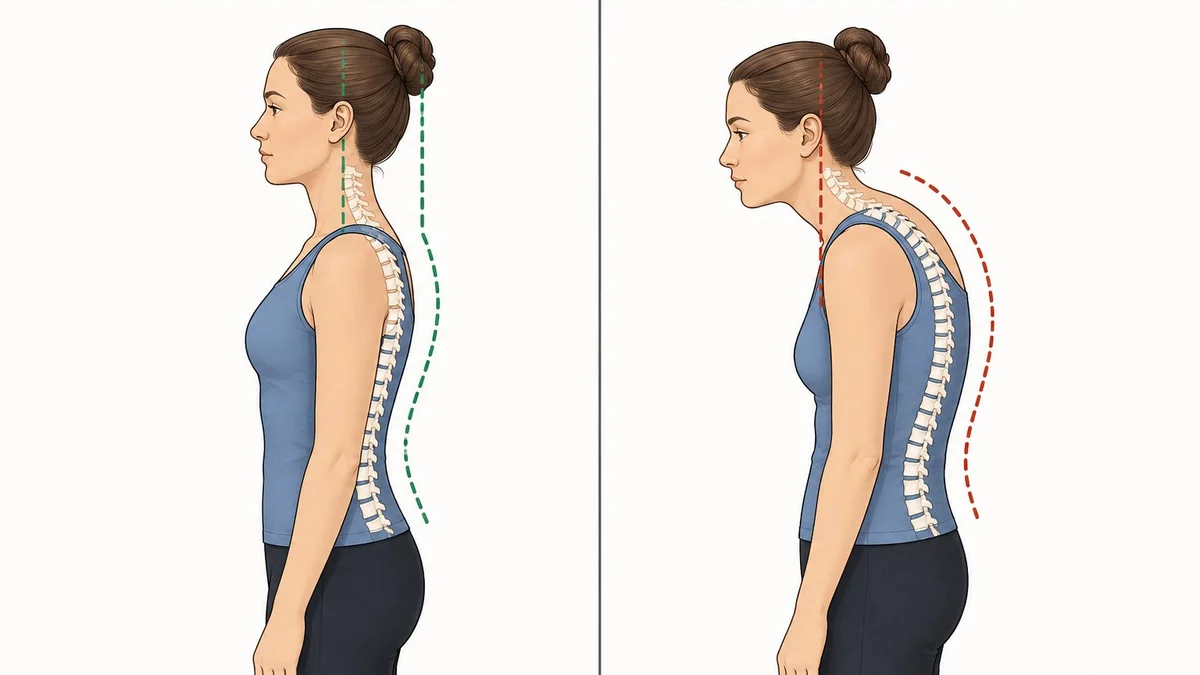
- Address forward head posture early. Since the posture-related hump develops from the same mechanism as forward head posture, the exercises above (chin tucks, wall pec stretch, upper back strengthening) are the same starting point.
- Weight and lifestyle factors. For posture-related humps, general fitness and posture awareness throughout the day matter more than any single exercise.
- When to see a doctor first. If the area is soft, appeared suddenly, or comes with other symptoms, get evaluated before starting a self-care routine — this helps rule out a non-postural cause.10
When to Seek Medical Evaluation Instead
Self-care is appropriate for most everyday aches and pains, but certain symptoms need medical attention first.
⚠️ Seek medical evaluation if you have:
- New numbness or weakness in an arm or leg
- Loss of bladder or bowel control
- Numbness in the groin or inner thighs (saddle numbness)
- Fever along with back or neck pain
- Unexplained weight loss
- Pain following significant trauma
- A neck hump or lump that appeared suddenly
- Symptoms that are worsening despite self-care
If any of these apply to you, seek medical evaluation rather than continuing self-care alone. Otherwise, if you've tried self-care for a week or two without meaningful improvement, that's a good time to come in for an evaluation.
Related Guides
Back & Neck Pain
Our full guide on causes, conservative care, and when to see a chiropractor.
Read the Guide →Sciatica
Causes, red flags, and treatment — including the pinched-nerve connection.
Read the Guide →Hurt in an Accident?
If your pain started after a car accident, see our dedicated auto injury guidance.
Auto Injuries →3. Conservative Management of Low Back Pain — PMC, National Library of Medicine
4. Heat vs. Ice for Low Back Pain — evidence summary
5. Posture Exercises to Fix Rounded Shoulders & Forward Head — evidence-based overview
6. Changes in Rounded Shoulder Posture and Forward Head Posture According to Exercise Methods — PMC
7. Effects of Elastic Band Exercise on Rounded Shoulder and Forward Head Posture — PMC
8. Improvement of Movement Patterns After Corrective Exercise Intervention — ScienceDirect
9. Neck Hump Terminology — Dowager's Hump vs. Buffalo Hump
10. Buffalo Hump: What It Is, Causes & Treatment — Cleveland Clinic
11. Dowager's Hump: What It Is and How to Get Rid of It — Cleveland Clinic
Frequently Asked Questions
Should I use heat or ice for low back pain?
For most acute low back pain, superficial heat has the strongest evidence for short-term pain relief, applied for 15-20 minutes at a time. Research has not shown a clear benefit from ice for low back pain specifically, though it is not harmful and some people find it soothing. Staying as active as your symptoms allow is more important than choosing heat versus ice.
Is a "buffalo hump" the same as poor posture?
Not necessarily — these are often confused. A true buffalo hump (dorsocervical fat pad) is a fat deposit, sometimes linked to hormonal factors or certain medications, and should be evaluated by a doctor, especially if it appeared suddenly. What most people mean when they say "buffalo hump" is actually a posture-related hump at the base of the neck, sometimes called a dowager's hump, caused by forward head posture and upper back rounding over time. This type generally responds well to posture correction and targeted exercise.
How long should I try self-care before seeing a chiropractor?
If your symptoms are mild and improving, a week or two of self-care is reasonable. If symptoms aren't improving, are getting worse, or are affecting your daily activities, sleep, or work, it's a good time to get evaluated rather than continuing to wait it out.
Can posture exercises really fix rounded shoulders and forward head posture?
Yes, for many people. Research has found that targeted stretching and strengthening exercises can measurably improve forward head posture and rounded shoulder posture. Consistency matters more than any single exercise — the pattern typically develops over months or years, so correcting it also takes sustained effort.
Not Improving With Self-Care?
If self-care isn't cutting it, or you're not sure which of these applies to you, we're happy to help you figure out the right next step.
Disclaimer: This page is for general educational purposes and is not a substitute for professional medical evaluation. If you have any of the warning signs described above, seek medical evaluation right away. Self-care strategies do not guarantee specific outcomes, and appropriate care depends on your individual situation.